

The executive office desk is more than a piece of furniture; it is the physical anchor of leadership. In the modern workplace, where first impressions are formed in seconds and authority is communicated through subtle cues, the desk at which a senior leader sits carries symbolic and practical weight in equal measure. Understanding what makes an executive desk distinctive—and how to choose the right one—is essential for anyone tasked with designing a space that reflects both power and purpose.
The Symbolism of the Executive Desk
Historically, the executive desk has served as a marker of rank and responsibility. From the mahogany partners' desks of nineteenth-century banking houses to the sleek, minimalist workstations of today's technology executives, the desk signals who holds decision-making authority. Its scale, material, and placement communicate values before a single word is spoken. A substantial desk suggests stability and permanence; a clean, uncluttered surface suggests focus and clarity. In an era when leadership is often performed in open-plan environments, the executive desk remains a rare zone of defined personal territory.
Design and Craftsmanship
High-quality executive desks are distinguished by their materials and construction. Solid hardwood—walnut, oak, or cherry—remains the benchmark for durability and warmth, while veneered surfaces offer similar aesthetics at lower cost. Metal accents, leather inlays, and integrated cable management are common features in premium models. Ergonomics matter as much as appearance: an executive desk should provide adequate knee clearance, a comfortable working height (typically 29 to 30 inches), and sufficient surface area for a monitor, documents, and personal items without becoming cluttered. Many contemporary designs incorporate height-adjustable mechanisms, allowing leaders to alternate between sitting and standing during long working days.
Function Meets Form
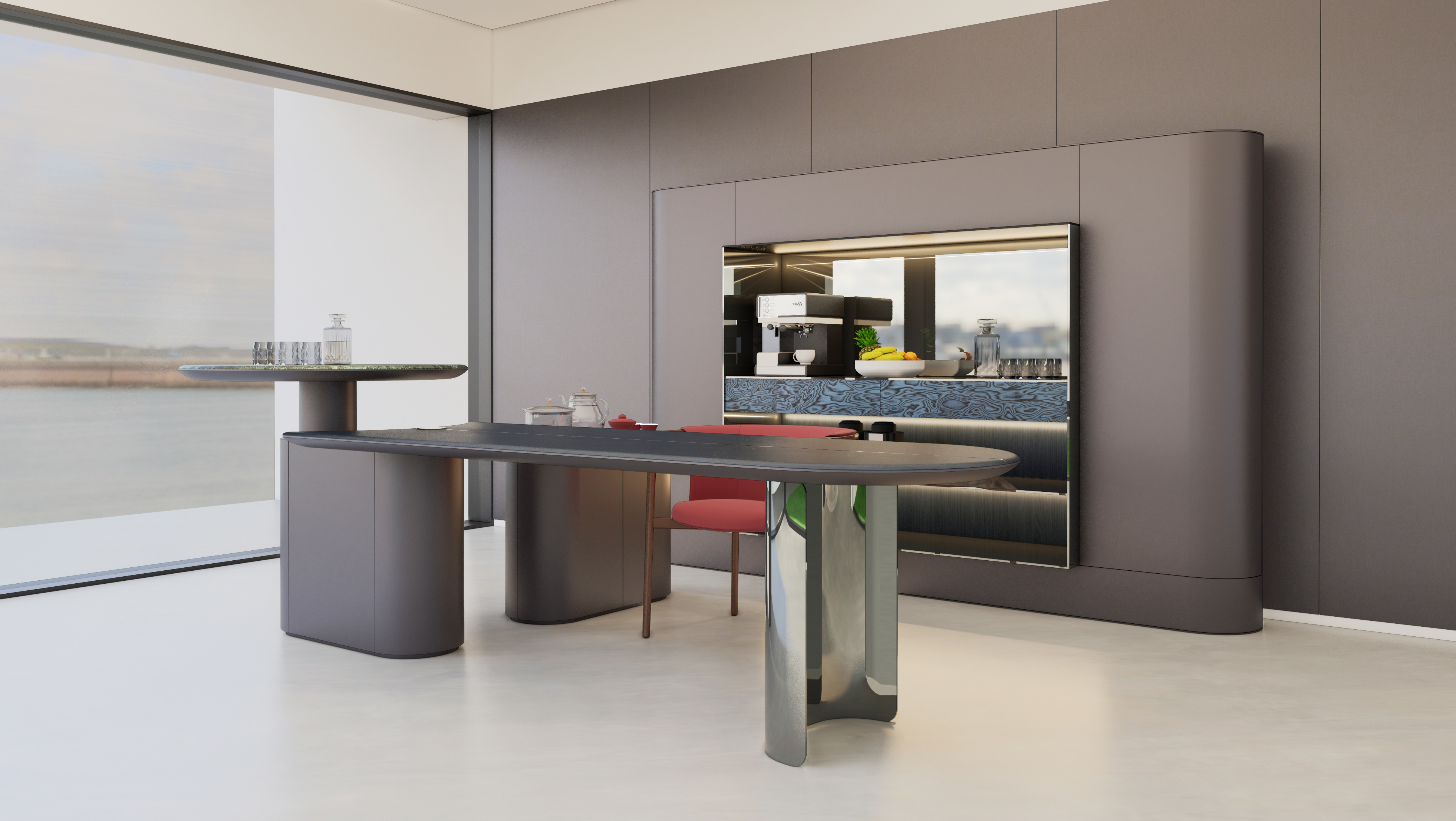
The modern executive desk must accommodate a range of activities: deep-focus work, video conferencing, impromptu meetings, and quiet reflection. This functional diversity has driven innovation in desk design. Partners' desks, with their two-sided configuration, support collaborative discussions while maintaining a commanding central position. L-shaped and U-shaped desks extend the working surface and create zones for different tasks. Integrated power outlets, wireless charging pads, and discreet cable routing keep technology accessible without visual noise. Storage—drawers, credenzas, and concealed compartments—remains important, though many executives now favour a more minimalist surface, storing documents digitally and keeping only essential items within reach.
Choosing the Right Desk
Selecting an executive desk requires balancing three considerations: proportion, material, and workflow. Proportion refers to the desk's size relative to the room and the user. An oversized desk in a small office can feel oppressive; an undersized desk in a large suite can appear diminished. Material should harmonize with the broader interior design while reflecting the organisation's culture—traditional wood for established institutions, glass and steel for forward-looking firms. Workflow considerations determine configuration: a leader who hosts frequent one-on-one meetings may benefit from a partners' desk, while one who works primarily alone may prefer a single-sided design with generous storage.
A Lasting Investment
An executive office desk is a long-term investment. Unlike office technology, which cycles every few years, a well-made desk can serve for decades, acquiring character and familiarity over time. When chosen thoughtfully, it becomes not only a tool of productivity but a quiet statement of professional identity—a place where decisions are made, relationships are built, and the work of leadership is carried out day after day.
复制
This website uses cookies to ensure you get the best experience on our website.


 العربية



Comment
(0)